ServicesRoof Treatments
Roof Treatment Service in Latham
Dark streaks, green moss and crusty lichen hurt more than your roof's looks. Our low-pressure treatment kills the growth at the root while protecting shingles and plantings, and one person on our team runs your job from the first call to the final walk-around.
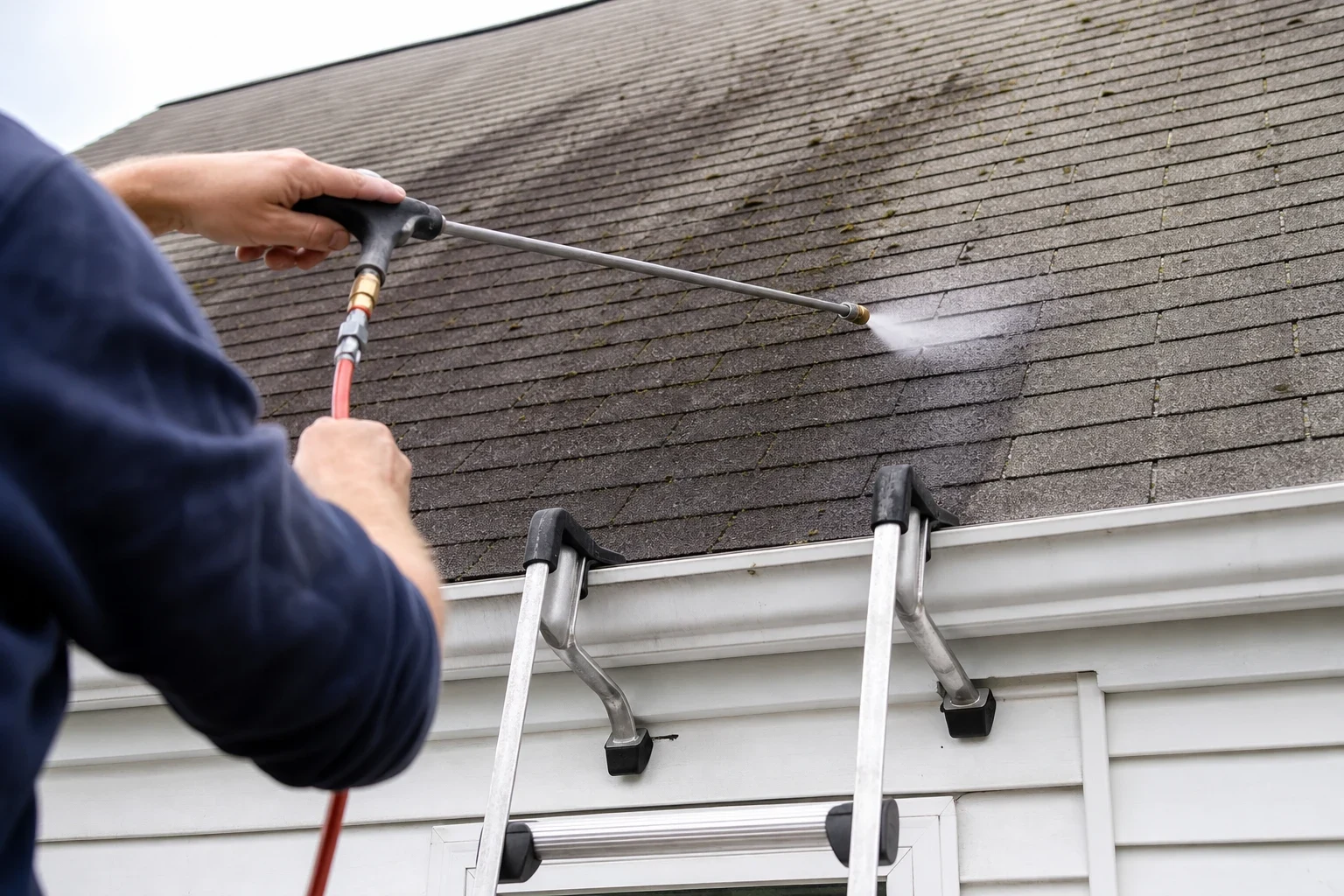
Why roof streaks keep spreading, and how we stop them
Those dark stripes running down an asphalt roof are usually a living algae, not grime. It feeds on the limestone filler mixed into many shingles, so it creeps a little farther each year. On shady slopes, moss and lichen move in behind it, keeping the surface damp and prying up shingle edges as they spread.
Our treatment kills that growth with a gentle application. A pressure washer never touches your shingles, since high pressure tears off the protective granules and takes years off the roof. We put the solution on at low pressure, give it time to work, and the next few weeks of rain rinse the dead growth away.
From your first call, one person handles your job. The same contact looks at your roof, writes your quote, sets the crew's schedule and checks the finished work with you, so you always know exactly who to ask.
What's included in every roof treatment
- A close look before any quote
- We check the roof from the ground and the ladder, note what is growing and where, and show you photos of what we found. You hear plainly whether a treatment will help or whether something else needs attention first.
- Protection for plants and siding
- Before we start, we wet down shrubs, flower beds and lawn edges near the drip line and cover delicate plantings. We rinse them again when we finish.
- Low-pressure application
- The treatment is applied gently across every affected slope, with extra attention to north-facing and tree-shaded sections where moss and lichen hold on hardest. Nobody walks your roof more than the job needs.
- Treatment matched to your roof
- Asphalt shingles, cedar shakes and metal panels each react differently. We adjust the mix and the method to the material on your house rather than using one recipe for everything.
- Cleanup and a final walk-around
- We pick up any debris that falls, rinse walkways and patios near the house, and walk the property with you before we leave. Your contact explains what you should see over the next few weeks.
When your roof needs a treatment
Dark gray or black stripes
Long dark bands down the slope are the telltale mark of roof algae. They tend to begin on the shady side of the house and spread from there.
Moss on edges and seams
Moss likes the overlaps between shingles and the area near the eaves. It holds water on the roof, which can build into ice during a Capital Region winter.
Crusty lichen patches
Lichen shows up as flat gray or pale green spots fixed firmly to shingles. It holds on tight and loosens granules as it spreads, so it pays to treat it early.
Granules piling up at downspouts
Grit gathering at the foot of a downspout can mean growth is stripping the protective coat from your shingles. We'll say plainly if a treatment will help or if you need a roofer instead.
A roof that looks older than its age
When shingles have plenty of life left but the house looks worn from the street, a treatment can restore the original color and your curb appeal.
How your roof treatment goes, start to finish
- 1
A quick phone call
Tell us what you are seeing and where the house is. We set a time to come look, and the person you talk to stays your contact for the whole job.
- 2
Inspection and written quote
We look at the roof, take photos and walk you through them. You get a clear quote with what is included and nothing tacked on later.
- 3
Treatment day
We pick a dry, calm day so the solution stays where it belongs. The crew protects your plantings, applies the treatment at low pressure, then rinses landscaping and walkways. Most homes are done within a day.
- 4
The weeks after
The growth dies right away, but streaks fade gradually as rain washes them off. Your contact checks in so you can see the difference and ask anything that comes up.
How we price a roof treatment
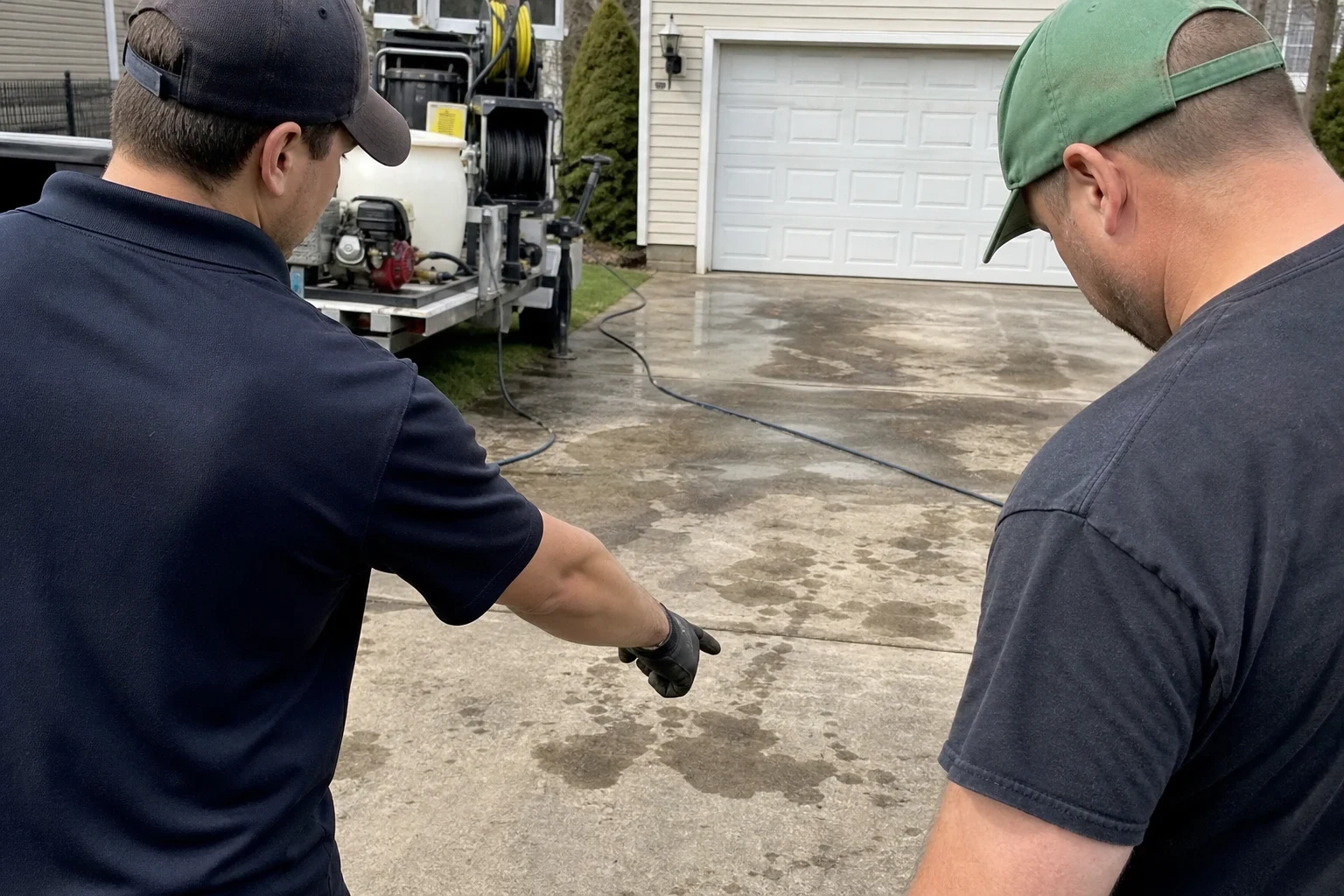
Every roof gets priced after we see it in person. The total depends on how much area needs treatment, how hard it is to reach and how firmly the growth has taken hold. Your price is written down before we book a date.
- Roof size and pitch
- A larger roof takes more solution and more time up the ladder. Steep pitches need extra safety gear and a slower, careful pace.
- Reaching the roof
- A two-story colonial with big trees over the eaves needs more setup than a one-story ranch that's open on every side.
- How deep the growth runs
- New algae streaks clear easily. Thick moss and lichen that have clung to shingles for years can need a stronger mix or a second pass where it's worst.
- Your roofing material
- Cedar shakes and metal panels call for different products and a gentler hand than regular asphalt shingles.
- Gardens under the drip line
- Full flower beds and fragile shrubs close to the house take extra time to cover and wet down beforehand and rinse afterward.
Roof treatment questions we hear most
Something not covered here? (518) 765-7277
Will the treatment damage my shingles?
No. We use low pressure and never blast shingles with a pressure washer, which is what strips granules and causes damage. The solution kills the growth and rain does the rest. Your roof keeps its protective layer intact.
Why don't the streaks disappear the same day?
The algae and moss die quickly, but their stains take a few weeks of rain to wash away fully. Lichen in particular lets go slowly. Most homeowners see a clear change within a month or so, and your contact will check in to make sure it is fading as expected.
Is it safe for my garden and pets?
We pre-wet and rinse plants near the house and cover the most delicate ones. We ask that pets stay inside while the crew is working and until surfaces are rinsed and dry. If you have a garden bed you are especially worried about, point it out and we will give it extra care.
How long will my roof stay clear?
That depends on shade, tree cover and how much moisture your roof holds. Sunny roofs often stay clear for several years, while shaded north slopes may show new growth sooner. We will give you an honest idea based on what we see on your house.
How long have you been doing this work?
We have been in business 5 years, serving Latham, Colonie, Loudonville and nearby towns. Many of the same customers also ask us about permanent exterior lighting installation for their roofline, and the same contact can talk you through both.
Ready to see your roof's real color again?
Tell us what is growing up there and we will come take a look. One person answers your questions, sets the date and makes sure the job is finished right.